Welcome: SANYO DENKI San Ace cooling fan product chain in China region
Language:
 ∷

∷
 ∷

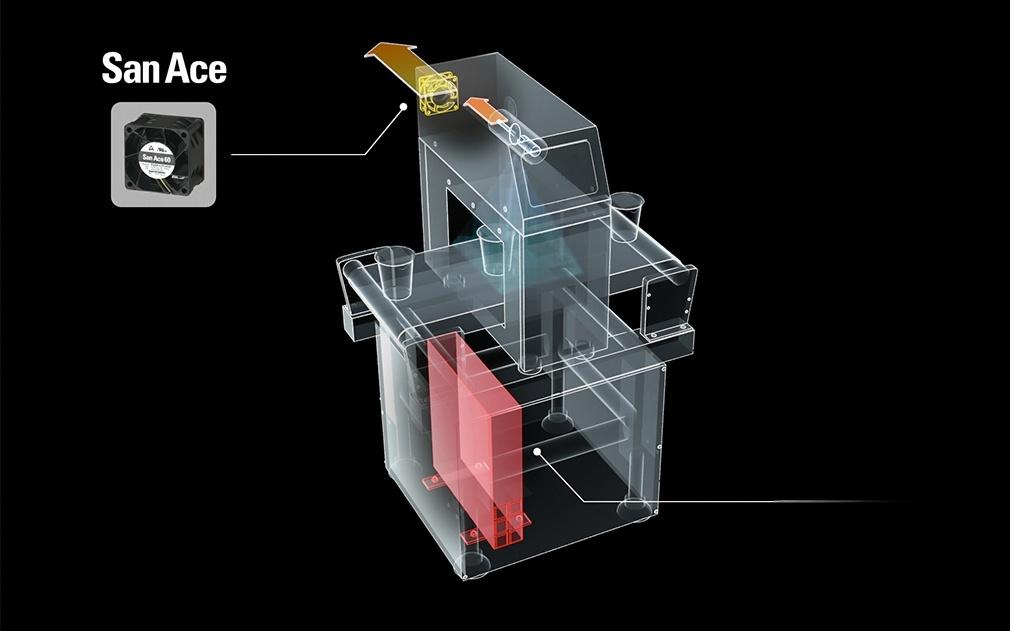
In food processing, pharmaceutical packaging, and industrial manufacturing, X-ray inspection systems play an important role in product quality control.
From detecting metal fragments and glass contaminants in packaged food to identifying internal defects in industrial products, these systems must continuously generate X-rays, capture detection signals, and process images to deliver accurate inspection results.
Behind this continuous inspection process, however, lies an often-overlooked engineering challenge: heat management in the X-ray generator.
During operation, an X-ray generator produces heat. Its high-voltage power supply, power semiconductor devices, and associated electronic components all require appropriate operating temperatures. In continuous-production environments, heat can accumulate inside the equipment over time.
Insufficient cooling may increase the risk of overheating, thermal protection events, performance fluctuations, and premature component aging.
How can equipment manufacturers remove heat effectively when installation space is limited?
SANYO DENKI's San Ace DC Cooling Fans offer a range of solutions featuring high airflow, high static pressure, low power consumption, and various control options.
This article examines the San Ace 60×60×38 mm axial fan series and explains how different models can be evaluated for X-ray generator cooling applications.
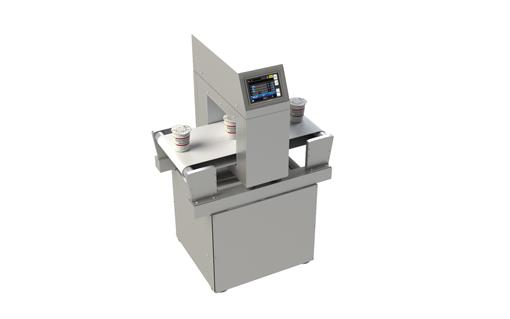
An X-ray contamination inspection system is not simply an X-ray generator. It is an integrated system consisting of multiple functional modules, including:
X-ray generator
Detector
Image-processing unit
Power supply
Control electronics
Conveyor and mechanical components
Among these components, the X-ray generator is one of the key areas requiring thermal management.
An X-ray generator converts electrical energy into X-ray radiation. Not all the electrical energy supplied to the generator becomes useful radiation; some is converted into heat.
During extended operation, this heat can accumulate inside the generator. A suitable cooling structure is therefore essential to maintain an appropriate operating temperature.
High-voltage power supplies, power semiconductor devices, and other electronic components may also generate considerable heat.
Excessive operating temperatures can accelerate component aging and potentially affect long-term equipment reliability.
In addition to generating X-rays, inspection systems must process signals collected by their detectors.
Control boards, processors, and power modules can become additional heat sources. For this reason, thermal design should consider the airflow throughout the entire enclosure rather than focusing on a single fan.
A common mistake when selecting cooling fans is assuming that a fan with a high maximum airflow rating will automatically provide sufficient cooling.
In practice, a fan's maximum airflow and maximum static pressure are measured at different operating conditions. They cannot normally be achieved simultaneously.
Inside an actual inspection system, air must pass through components such as:
Air intake openings
Protective grilles
Heat sinks
Internal air ducts
Dust filters
Exhaust openings
Each of these elements introduces airflow resistance.
Therefore, fan selection should consider both airflow and static pressure.
|
Key Parameter |
Thermal Impact |
Selection Considerations |
|---|---|---|
|
Maximum airflow (CFM) |
Determines the potential air-exchange capacity |
Is the airflow sufficient for the heat load? |
|
Maximum static pressure (Pa) |
Indicates the fan's ability to overcome airflow resistance |
Is it suitable for restrictive airflow paths? |
|
Speed (RPM) |
Influences airflow performance and noise |
Does it meet the operating requirements? |
|
Power consumption (W) |
Affects auxiliary power consumption and fan heat generation |
Is a low-power solution required? |
|
Noise (dBA) |
Affects overall equipment noise |
Does it meet the noise requirements? |
|
Expected service life (h) |
Influences maintenance planning |
Is it suitable for the intended operating conditions? |
The key principle: Select a fan that delivers sufficient airflow at the actual system operating point, rather than relying solely on its maximum free-air performance.
For example, if an X-ray generator uses dense heat sinks, narrow air passages, or filtered air inlets, static pressure becomes an important selection factor.
This is one reason why the San Ace 60×60×38 mm high-performance axial fan series deserves consideration.
Some X-ray inspection systems have limited internal installation space while requiring cooling fans to overcome resistance from heat sinks, filters, and internal airflow passages.
In these applications, a 60×60×38 mm DC axial fan can be a candidate solution worth evaluating.
The San Ace range includes multiple models in this size, allowing equipment designers to compare different combinations of airflow, static pressure, power consumption, and noise.
For X-ray generators with dense heat sinks or relatively narrow airflow passages, a fan with strong static-pressure performance may be worth prioritizing.
|
Parameter |
Specification |
|---|---|
|
Model |
9HVA0612P1J001 |
|
Dimensions |
60×60×38 mm |
|
Rated Voltage |
12 V DC |
|
Rated Current |
2.8 A |
|
Rated Power |
33.6 W |
|
Rated Speed |
24,800 min⁻¹ |
|
Maximum Airflow |
2.39 m³/min (84.3 CFM) |
|
Maximum Static Pressure |
2,000 Pa (8.0 inH₂O) |
|
Noise Level |
68 dBA |
|
Expected Life |
40,000 hours at 60°C; 70,000 hours at 40°C |
|
Sensor |
Pulse Sensor |
|
PWM Control |
Yes |
Application considerations
The 9HVA0612P1J001 delivers a maximum static pressure of 2,000 Pa, making it a particularly strong candidate in the 60×60×38 mm models covered in this article.
It can be evaluated for X-ray generator cooling structures where airflow must pass through restrictive heat sinks or narrow internal ducts.
Its rated power is 33.6 W and its noise level is 68 dBA. Equipment designers should therefore consider the available auxiliary power budget and noise requirements when evaluating this model.
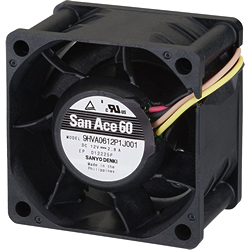
For systems requiring substantial airflow and static pressure, while allowing some flexibility in performance selection, the 9HV series is another option.
|
Parameter |
Specification |
|---|---|
|
Model |
9HV0612P1J001 |
|
Dimensions |
60×60×38 mm |
|
Rated Voltage |
12 V DC |
|
Rated Current |
2.7 A |
|
Rated Power |
32.4 W |
|
Rated Speed |
21,700 min⁻¹ |
|
Maximum Airflow |
1.88 m³/min (66.4 CFM) |
|
Maximum Static Pressure |
1,750 Pa |
|
Noise Level |
68 dBA |
|
Expected Life |
40,000 hours at 60°C; 70,000 hours at 40°C |
|
Sensor |
Pulse Sensor |
|
PWM Control |
Yes |
Application considerations
Compared with the 9HVA model, the 9HV0612P1J001 has lower maximum airflow and maximum static pressure, while still offering substantial air-moving capability.
It can be considered for X-ray generator cooling structures with moderate-to-high airflow resistance where the highest available static pressure is not necessarily required.
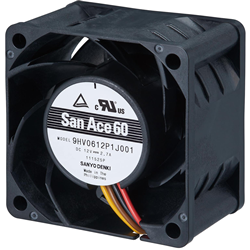
Not every X-ray inspection system requires extremely high airflow or static pressure.
For equipment with a well-designed airflow path and relatively low system resistance, a lower-power fan may help reduce auxiliary power consumption.
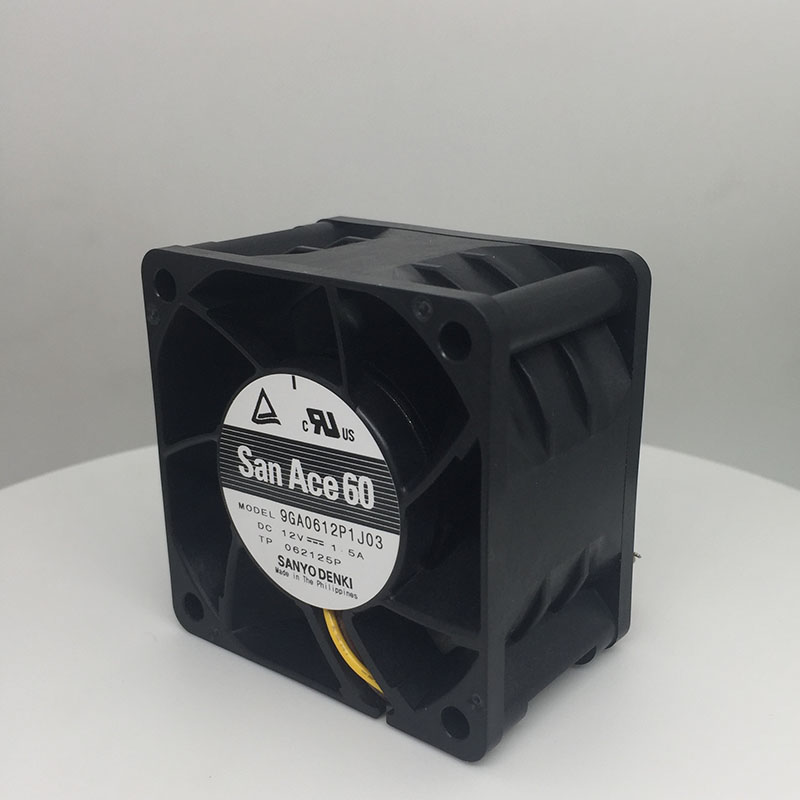
The San Ace 9GA series offers several performance levels for different cooling requirements.
|
Model |
Power |
Speed |
Max. Airflow |
Max. Static Pressure |
Noise |
|---|---|---|---|---|---|
|
9GA0612P1J03 |
18 W |
17,500 |
62 CFM |
820 Pa |
63 dBA |
|
9GA0612P1K03 |
11.4 W |
14,800 |
53 CFM |
600 Pa |
59 dBA |
|
9GA0612P1K60 |
11.4 W |
14,800 |
53 CFM |
675 Pa |
59 dBA |
|
9GA0612P1H03 |
6.6 W |
11,500 |
40 CFM |
375 Pa |
52 dBA |
Speed is expressed in min⁻¹. Maximum airflow and maximum static pressure are specified at different operating conditions.
Application considerations
9GA0612P1J03: Suitable for evaluation where relatively high airflow and static pressure are required, with consideration for power consumption and noise.
9GA0612P1K03: A candidate for equipment with moderate cooling requirements.
9GA0612P1K60: Offers the same rated speed, power consumption, and maximum airflow as the K03 model, but with a higher maximum static pressure.
9GA0612P1H03: Worth considering for systems with relatively low airflow resistance and moderate heat loads.
A lower-power fan is not automatically the best choice. The final selection should be based on the generator's heat load, allowable temperature rise, and actual airflow resistance.
The following table summarizes the models according to their potential application requirements.
|
Cooling Requirement |
Models to Evaluate |
Key Performance |
|---|---|---|
|
High airflow resistance and dense heat sinks |
9HVA0612P1J001 |
2,000 Pa maximum static pressure |
|
High airflow and static pressure |
9HV0612P1J001 |
66.4 CFM, 1,750 Pa |
|
Moderate-to-high cooling with power considerations |
9GA0612P1J03 |
62 CFM, 820 Pa, 18 W |
|
Moderate cooling requirements |
9GA0612P1K03 |
53 CFM, 600 Pa, 11.4 W |
|
Moderate airflow with higher static pressure |
9GA0612P1K60 |
53 CFM, 675 Pa, 11.4 W |
|
Low-resistance airflow path |
9GA0612P1H03 |
40 CFM, 375 Pa, 6.6 W |
X-ray inspection systems may use different DC power architectures. The San Ace 60 mm range includes 12 V, 24 V, and 48 V models.
For example:
|
Model |
Voltage |
Power |
Speed |
Max. Airflow |
Max. Static Pressure |
|---|---|---|---|---|---|
|
9GA0612P1J03 |
12 V |
18 W |
17,500 |
62 CFM |
820 Pa |
|
9GA0624P1J03 |
24 V |
18 W |
17,500 |
62 CFM |
820 Pa |
|
9GA0612P1K03 |
12 V |
11.4 W |
14,800 |
53 CFM |
600 Pa |
|
9GA0624P1K03 |
24 V |
12 W |
14,800 |
53 CFM |
600 Pa |
|
9GA0648P1K03 |
48 V |
11.52 W |
14,800 |
53 CFM |
600 Pa |
Power is in watts, speed in min⁻¹, airflow in CFM, and static pressure in Pa.
One important detail is that different voltage versions of the same series do not necessarily have identical rated power consumption.
When selecting a fan, designers should verify the rated voltage, current, power consumption, and control requirements rather than assuming that voltage alone determines performance.
If the equipment already uses a 24 V or 48 V DC power supply, choosing a corresponding fan version may simplify the power-supply design.
For X-ray inspection equipment and industrial inspection systems, cooling fan selection involves more than matching performance specifications. Product availability, model compatibility, and technical support are also important considerations.
Shenzhen JENTECH Electronics Co., Ltd. is an authorized distributor of Japan's SANYO DENKI San Ace cooling fans (San Ace / Sanyo fans). The company focuses on industrial thermal management solutions and received the “2023 Best Sales Award” and “2024 Outstanding Sales Award.”
Supported by a stable original-manufacturer supply chain and professional technical support capabilities, JENTECH provides San Ace product supply, model selection assistance, and application-related technical support.
For equipment manufacturers, JENTECH can help evaluate cooling fan options based on actual airflow requirements, static pressure, installation dimensions, and control functions.
For applications such as X-ray generators with specific thermal management requirements, suitable models can be evaluated according to the actual operating conditions and system design.


For X-ray inspection equipment designed for extended operation, a cooling fan should do more than continuously move air. Monitoring and control functions can also help improve overall system management.
If a fan stops, slows down abnormally, or experiences a performance problem without the equipment detecting it, internal temperatures may gradually rise.
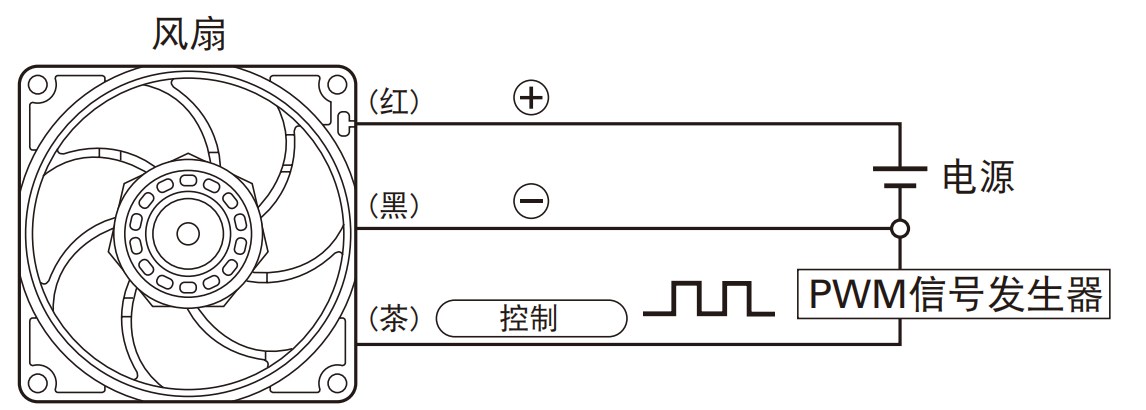
The San Ace DC cooling fan models covered in this article provide Pulse Sensor and PWM control functions that can support more advanced cooling management.
The listed 60×60×38 mm models are equipped with a Pulse Sensor.
By collecting the fan's output pulses, the equipment controller can monitor actual fan speed and identify deviations from predefined operating conditions.
For example:
Normal operation: The speed signal remains within the expected range.
Reduced speed: The controller can identify an abnormal speed deviation.
Fan stoppage: The absence of rotation pulses can be used as an indication of fan stoppage.
This capability is particularly useful for X-ray inspection equipment that must operate continuously.
It is important to note that a pulse output provides speed feedback; it does not automatically constitute a complete fan alarm system. The equipment controller must implement the relevant fault-detection and alarm logic.
All the listed 60 mm models support PWM control.
PWM (Pulse Width Modulation) allows the equipment controller to adjust fan speed through a control signal.
For example, the cooling strategy can be designed according to the internal temperature of the X-ray generator.
|
Equipment Condition |
Fan Control Strategy |
Design Objective |
|---|---|---|
|
Low load, low temperature |
Reduce fan speed where appropriate |
Reduce unnecessary power consumption and noise |
|
Normal inspection |
Maintain suitable fan speed |
Provide stable cooling |
|
High load, rising temperature |
Increase fan speed |
Improve airflow |
|
Temperature reaches warning threshold |
Increase cooling and trigger a system warning |
Help prevent further temperature rise |
This demand-based approach can help balance cooling performance, noise, and energy consumption.
The actual control strategy should be designed according to the fan's permitted control range, sensor locations, and the equipment's overall control logic.
Some models in the supplied product list are available in two structural versions.
For example:
9GA0612P1J03
9GA0612P1J031
The main performance specifications are the same, but the Ribbed structure differs.
|
Comparison |
Ribbed Version |
Non-Ribbed Version |
|---|---|---|
|
Example Model |
9GA0612P1J03 |
9GA0612P1J031 |
|
Frame Structure |
With Rib |
Without Rib |
|
Rated Voltage |
12 V |
12 V |
|
Rated Power |
18 W |
18 W |
|
Speed |
17,500 min⁻¹ |
17,500 min⁻¹ |
|
Maximum Airflow |
62 CFM |
62 CFM |
|
Maximum Static Pressure |
820 Pa |
820 Pa |
Ribbed and non-ribbed versions differ in their frame and mounting structure.
For compact X-ray inspection systems, installation details such as mounting holes, screw length, fastening method, and surrounding clearance should be checked in advance.
Therefore, model selection should not be based on airflow and static pressure alone. Mechanical compatibility must also be confirmed against the equipment drawings.
Even when a high-performance cooling fan is selected, this does not automatically guarantee effective cooling at the system level.
For X-ray inspection equipment, the following design and validation steps are recommended.
First, determine the heat generation of the X-ray generator, the temperature limits of critical components, and the temperature rise under different operating conditions.
The required fan airflow should not be estimated simply from the equipment's total electrical input power.
Install the fan in the actual equipment structure and consider the resistance introduced by filters, protective grilles, heat sinks, and duct bends.
The system resistance curve should then be evaluated together with the fan's P-Q performance curve to determine whether the actual operating point provides sufficient airflow.
A clear airflow path should be established:
Cool air enters through the equipment's air inlet.
Air passes through the X-ray generator and other heat-generating components.
Heated air is discharged through the designed exhaust path.
The exhaust air should not be allowed to re-enter the intake, which could create hot-air recirculation.
For inspection equipment designed for extended operation, testing should include high-load conditions, continuous running, and variations in ambient temperature.
Key parameters to monitor include:
Internal X-ray generator temperature
Temperature rise of critical electronic components
Actual fan speed
Operating noise
Cooling stability during extended operation
Fan speed feedback should be combined with equipment temperature monitoring.
If the fan speed becomes abnormal or the temperature exceeds a predefined threshold, the equipment control system can initiate warnings, load reduction, or a safe shutdown, depending on the system design.
This approach makes the cooling fan part of the equipment's overall reliability management strategy rather than treating it as an isolated component.
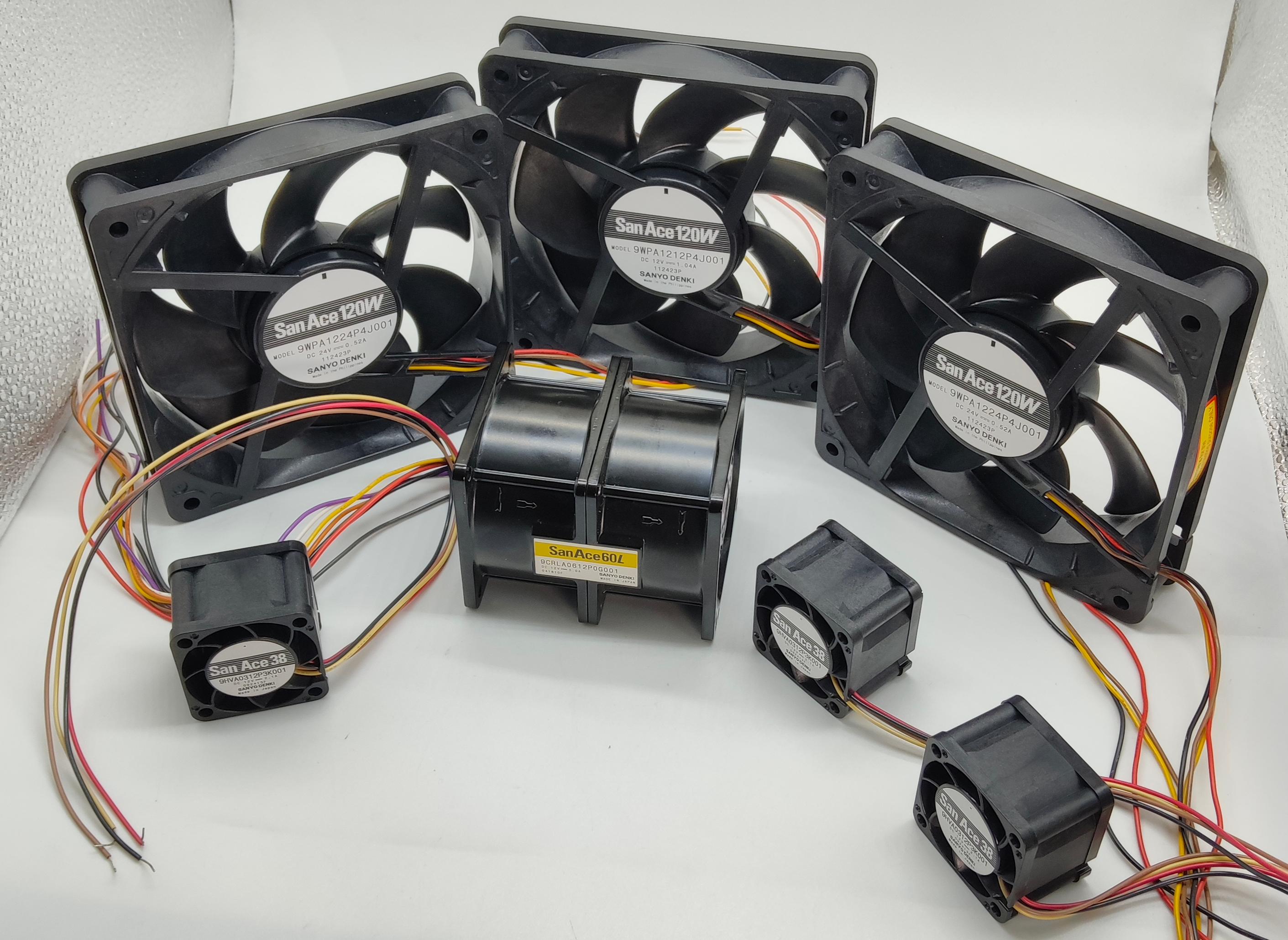
In addition to the 60×60×38 mm models discussed in this article, SANYO DENKI's San Ace DC Cooling Fan range offers a broad selection of products for different equipment structures and thermal requirements.
Key product features include:
|
Product Feature |
Technical Value |
Potential Applications |
|---|---|---|
|
High Airflow |
Improves air-exchange capacity |
Equipment with substantial heat loads |
|
High Static Pressure |
Helps overcome airflow resistance |
Dense heat sinks and narrow air passages |
|
Low Power Consumption |
Reduces auxiliary power requirements |
Energy-conscious equipment |
|
Low Vibration |
Helps reduce vibration-related effects |
Equipment requiring stable operation |
|
Multiple Frame Sizes |
More than 80 frame sizes |
Different installation spaces |
|
Diverse Product Series |
Silent, low-power, splash-proof, oil-proof, long-life options |
Different operating environments |
|
Sensor and Control Options |
Supports speed monitoring and PWM control |
Intelligent thermal management |
San Ace also offers a range of fan accessories:
Finger Guard: Helps reduce the risk of accidental contact with rotating blades.
Resin Filter Kit: Helps prevent dust from entering equipment.
EMC Guard: Designed for applications requiring consideration of electromagnetic noise.
For equipment with special structural or performance requirements, SANYO DENKI also offers customized fan-unit solutions based on application specifications.
For additional product information, please refer to:
The value of an X-ray contamination inspection system lies in its ability to deliver continuous and accurate product inspection.
To achieve reliable long-term operation, thermal management is just as important as the performance of the X-ray generator, detector, and image-processing system.
From the high-static-pressure 9HVA series to the high-performance 9HV series and the power-conscious 9GA series, San Ace 60×60×38 mm DC cooling fans provide multiple performance options for different thermal management requirements.
For equipment manufacturers, cooling fan selection should not simply focus on finding the model with the highest airflow rating.
Instead, it should take into account heat-source distribution, airflow resistance, installation space, operating duration, power consumption, and noise requirements.
When X-ray inspection never stops, cooling performance must remain dependable.
SANYO DENKI San Ace DC Cooling Fans offer a diverse product range and multiple control options for X-ray inspection equipment and industrial inspection systems.
Shenzhen JENTECH Electronics Co., Ltd. is an authorized distributor of Japan's SANYO DENKI San Ace cooling fans (San Ace / Sanyo fans). The company specializes in industrial thermal management solutions and received the “2023 Best Sales Award” and “2024 Outstanding Sales Award.”
With a stable original-manufacturer supply chain and professional technical support capabilities, JENTECH provides San Ace cooling fan products, technical consultation, and model selection assistance.
The company helps customers identify suitable cooling fan models based on actual application requirements, including airflow, static pressure, dimensions, supply voltage, and control functions.
Whether the application involves X-ray inspection equipment, medical instruments, industrial automation equipment, power supplies, communication systems, or other precision electronic equipment, JENTECH can provide corresponding San Ace product selection support.
Looking for a 60×60×38 mm high-static-pressure DC cooling fan, or need assistance selecting a cooling solution for an X-ray generator? Contact Shenzhen JENTECH Electronics Co., Ltd. for San Ace product information and technical selection support.
Q1: Why do X-ray contamination inspection systems need cooling fans?
X-ray generators and internal power electronic components produce heat during operation. Cooling fans promote forced-air circulation, helping remove heat from critical components and maintain suitable operating temperatures.
Q2: Should I choose a high-airflow or high-static-pressure fan for an X-ray generator?
The choice depends on the airflow resistance of the equipment.
For systems with dense heat sinks, filters, or narrow air passages, static pressure is particularly important. For systems with relatively low airflow resistance, effective airflow may be the primary consideration.
The final selection should be based on the actual fan operating point.
Q3: Which San Ace 60×60×38 mm models are worth considering?
The following models can be evaluated according to different requirements:
High static pressure: 9HVA0612P1J001, with a maximum static pressure of 2,000 Pa.
High performance: 9HV0612P1J001, with a maximum airflow of 66.4 CFM.
Lower power consumption: 9GA0612P1K03, with a rated power of 11.4 W.
Lower noise option: 9GA0612P1H03, with a noise level of 52 dBA.
These are preliminary selection references. Actual suitability must be verified against the equipment's thermal load and airflow resistance.
Q4: Do San Ace fans support speed monitoring and PWM control?
The 60×60×38 mm models covered in this article feature Pulse Sensor and PWM control. These functions can support speed feedback and fan-speed adjustment when integrated with the equipment control system.
Q5: Can Shenzhen JENTECH provide San Ace cooling fan selection assistance?
Yes. Shenzhen JENTECH Electronics Co., Ltd. is an authorized distributor of SANYO DENKI San Ace cooling fans. Based on customer requirements such as dimensions, voltage, airflow, static pressure, and operating environment, JENTECH can assist in identifying suitable fan models.
jamicon cooling fan,AVC cooling fan,jentech cooling fan,AVC fan
Contact: Mr. Wang
Phone: 18148574796
Tel: 0755-23706799
Email: wmc@jentech.cn
Add: No. 28, Tongyuwu Industrial Zone, Kuikeng Community, Guanlan Street, Longhua District, Shenzhen City. 6th floor, Building 1, Hualangjia Industrial Park
 Click to inquire