Welcome: SANYO DENKI San Ace cooling fan product chain in China region
Language:
 ∷
∷

∷
 ∷
∷

With the continuous advancement of medical technology, medical imaging equipment is evolving toward:
Medical devices such as CT scanners, MRI systems, ultrasound diagnostic equipment, and image analysis systems require powerful computing capabilities and highly reliable operation.
Inside these systems, many heat-generating components are integrated, including:
As these components operate continuously, heat generation becomes a major design challenge.
Therefore, thermal management plays a critical role in ensuring long-term equipment stability.
However, unlike ordinary industrial equipment, medical devices have another important requirement:
Cooling systems must not only control temperature but also minimize operating noise.
Because medical imaging equipment is often used in:
Fan noise can directly affect patient comfort and the overall medical experience.
Therefore, achieving:
Efficient cooling + Quiet operation
has become an important goal in medical equipment thermal design.
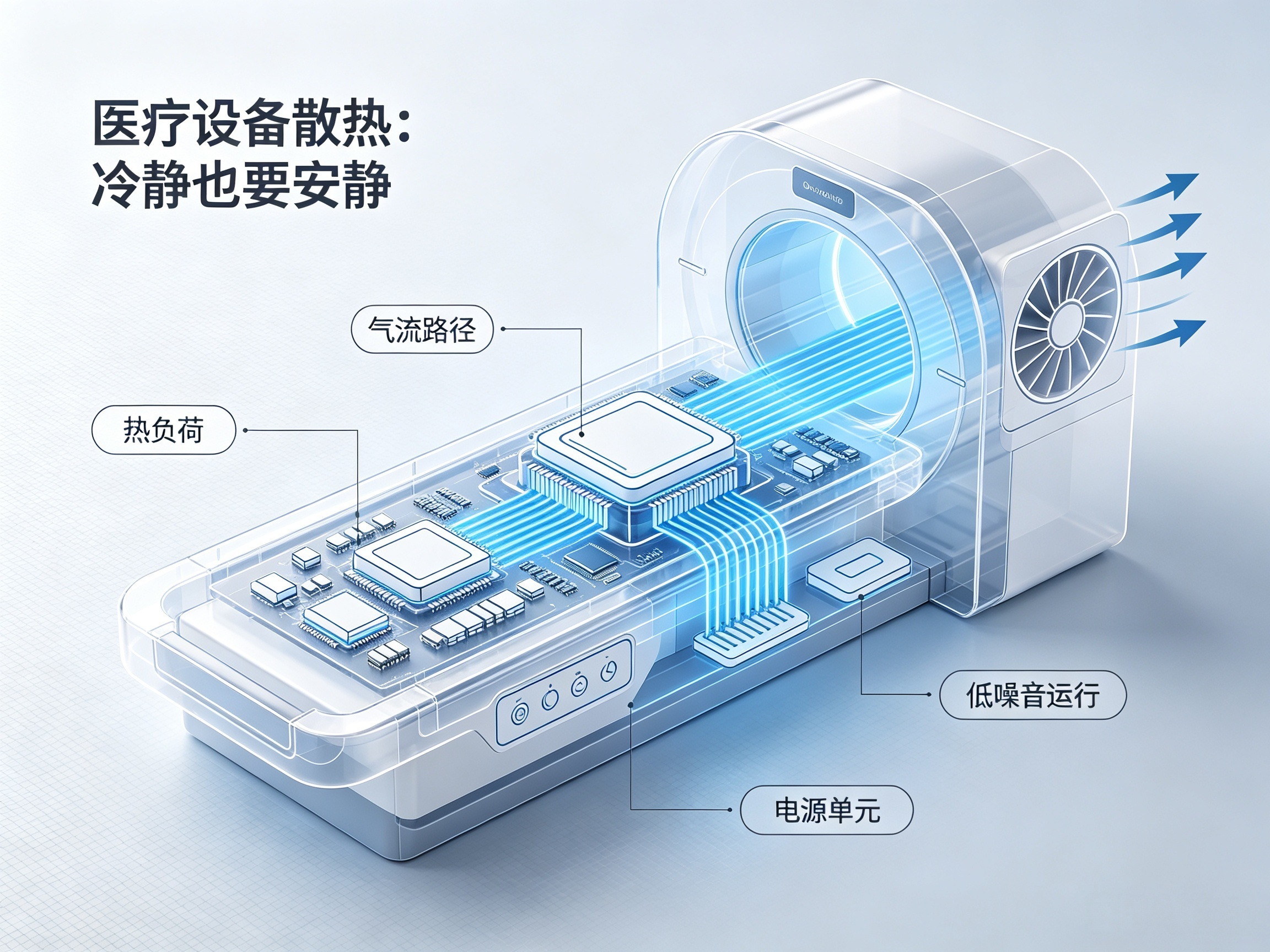
In traditional thermal design, engineers usually focus on:
However, as medical equipment performance continues to improve, simply achieving cooling performance is no longer enough.
Modern medical equipment must also achieve:
Medical equipment often operates continuously for extended periods.
Excessive internal temperature may lead to:
Medical environments are highly sensitive to noise.
During patient examinations:
may affect the overall user experience.
Medical devices are becoming increasingly:
However, smaller internal spaces usually create greater airflow resistance, placing higher demands on cooling fan performance.
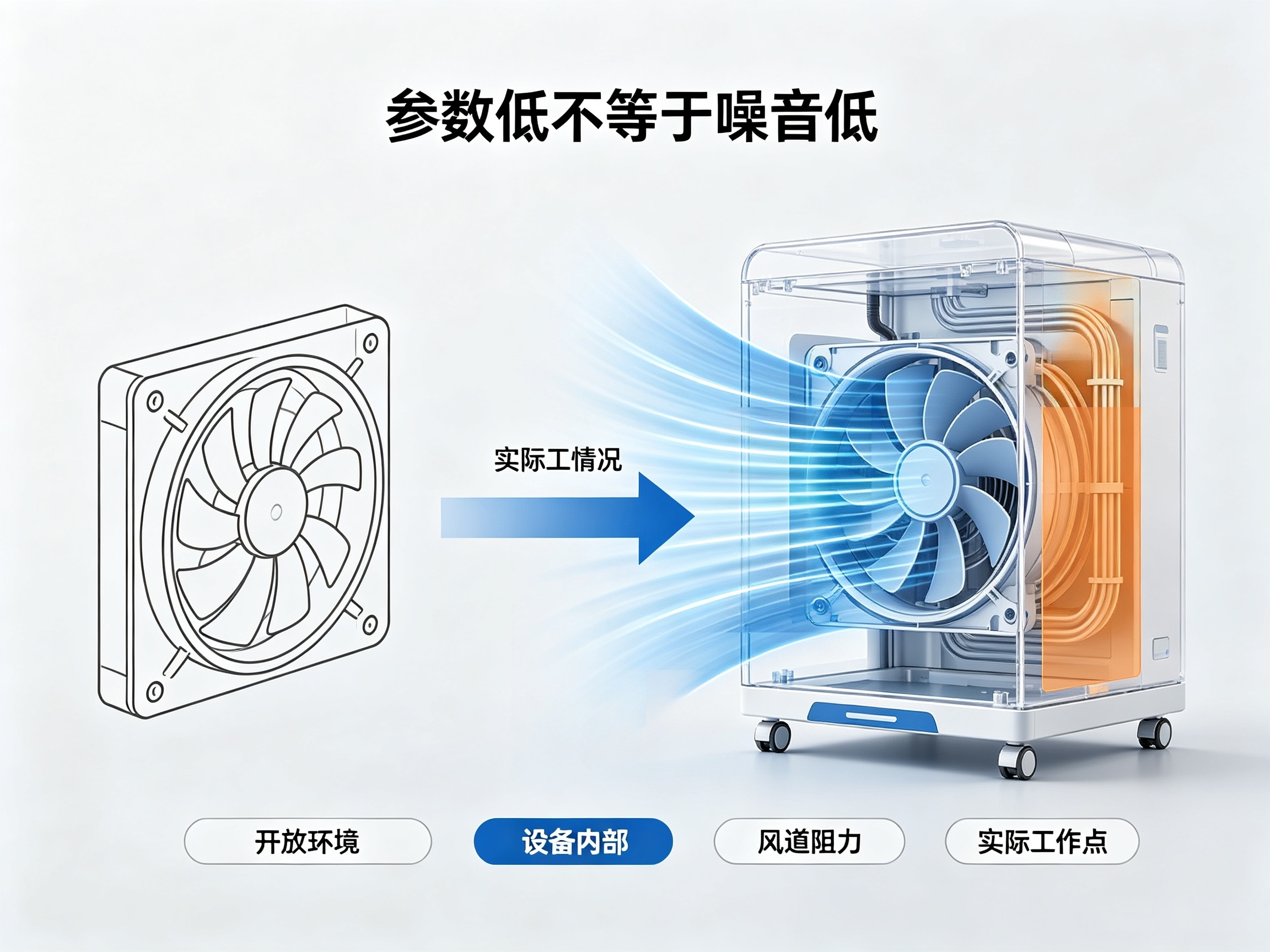
During the initial selection process, engineers often prioritize fans with:
“Lower noise specifications.”
However, a common issue appears during actual testing:
The fan becomes quieter, but cooling performance becomes insufficient.
The reason is that:
Fan specifications shown in product catalogs are generally measured under standard test conditions.
After installation inside actual equipment, performance can be affected by:
The same fan may perform very differently depending on the equipment design.
Therefore:
The key factor is:
The fan’s actual operating condition after installation.
To accurately evaluate fan performance inside equipment, engineers need to understand a key concept:
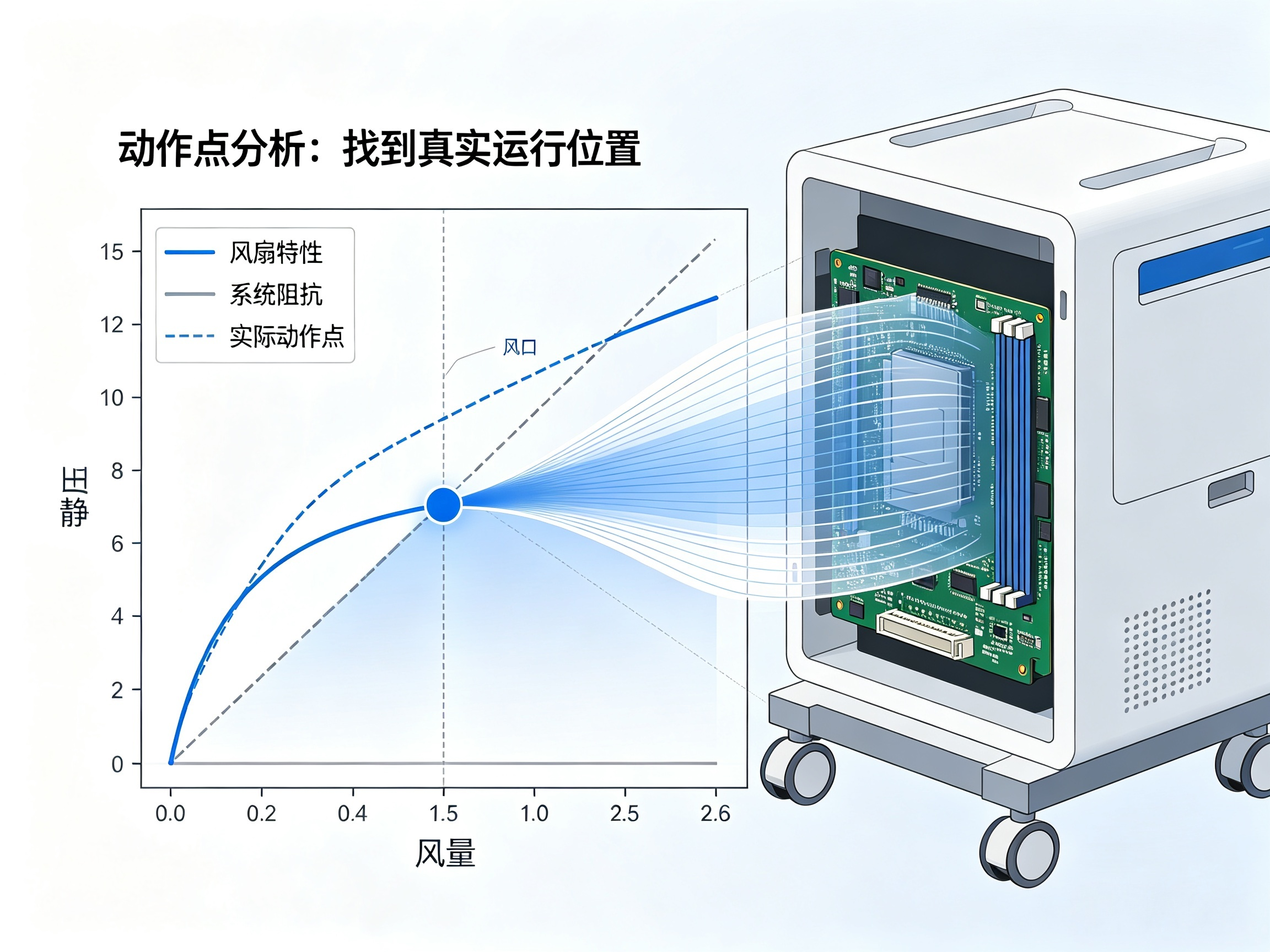
During operation, a cooling fan is affected by the system impedance of the equipment.
Simply explained:
The balance between these two factors determines the actual operating point.
By analyzing the operating point, engineers can understand:
Instead of relying only on catalog maximum values.
As a leading industrial cooling fan brand, SANYO DENKI San Ace cooling fans are widely used in applications requiring high reliability, including:
For medical equipment applications, SANYO DENKI focuses not only on fan specifications but also on actual equipment operating conditions.
Through:
engineers can evaluate the internal airflow environment of the equipment.
Based on measurement data, engineers analyze:
and select a cooling solution that better matches the actual application.
Many people believe that reducing noise simply requires selecting a lower-speed fan.
However, the actual situation is more complicated.
Even a fan with a low noise rating may generate higher noise after installation if it operates outside its optimal range.
Operating point analysis helps prevent problems such as:
By selecting the appropriate cooling fan, the equipment can achieve:
In an actual medical imaging equipment application, optimized fan selection achieved:
while maintaining:
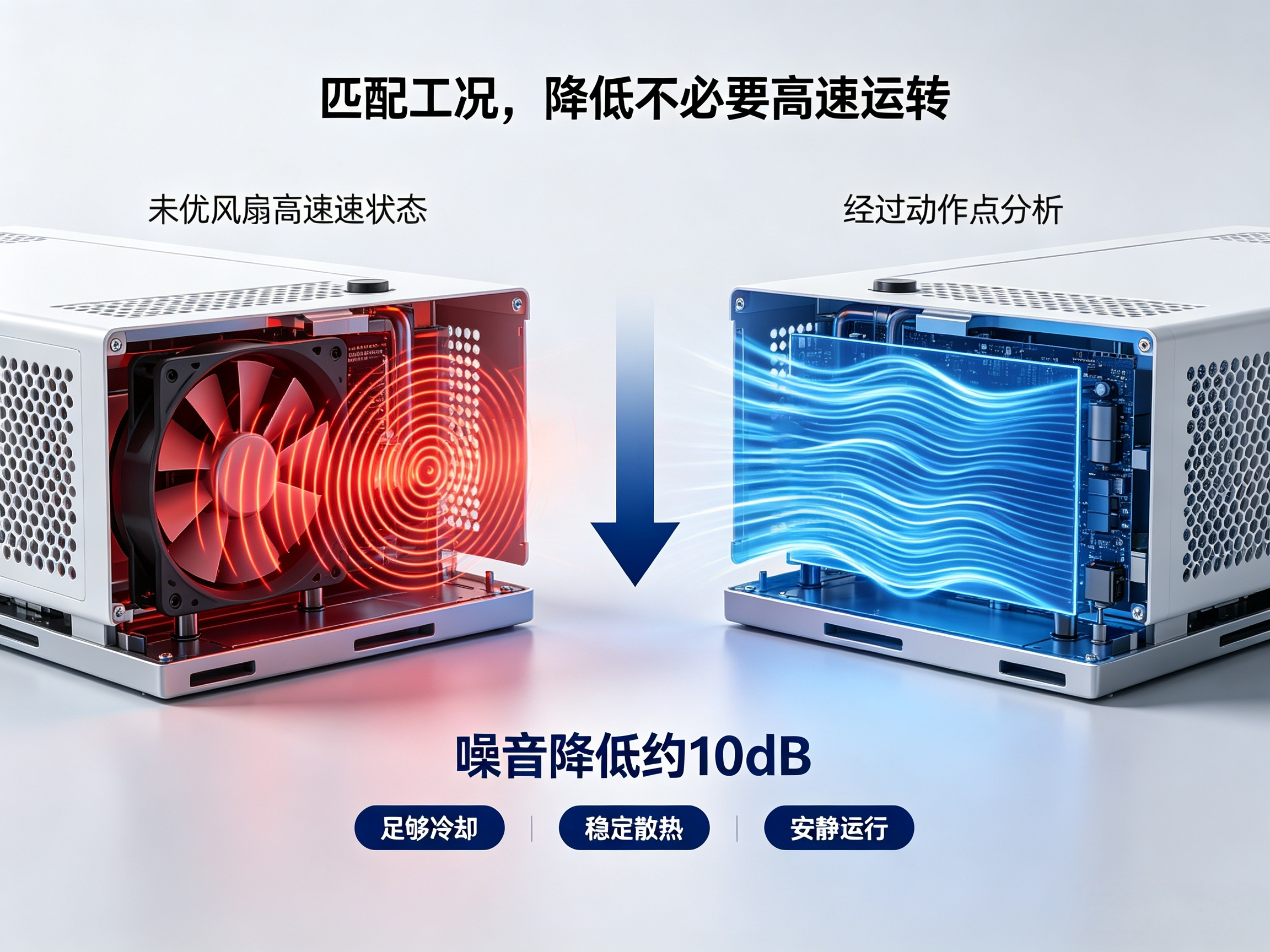
For medical applications, cooling fan selection should not rely on only one specification.
Engineers should consider multiple factors:
| Selection Factor | Key Considerations |
|---|---|
| Airflow | Whether cooling capacity meets thermal requirements |
| Static Pressure | Whether the fan can overcome internal airflow resistance |
| Noise | Whether operation is suitable for medical environments |
| Life Expectancy | Whether long-term reliability is ensured |
| Vibration | Whether precision equipment performance is affected |
| Control Function | Whether PWM speed control is required |
| Operating Environment | Whether special protection ratings are needed |
As medical equipment continues to evolve, thermal design concepts are also changing.
Traditional approach:
Select a fan based on specifications.
Modern approach:
Select a fan based on the actual operating condition of the equipment.
The best cooling solution is not always the fan with the highest performance.
Instead, it is:
For medical imaging equipment:
Low noise is not only about user comfort.
It has become an important factor influencing product competitiveness.
At the same time, efficient cooling remains essential for long-term reliability.
These two goals are not contradictory.
Through scientific fan selection methods, operating point analysis, and system impedance evaluation, engineers can achieve:
Quieter, more reliable, and more efficient thermal designs for medical equipment.
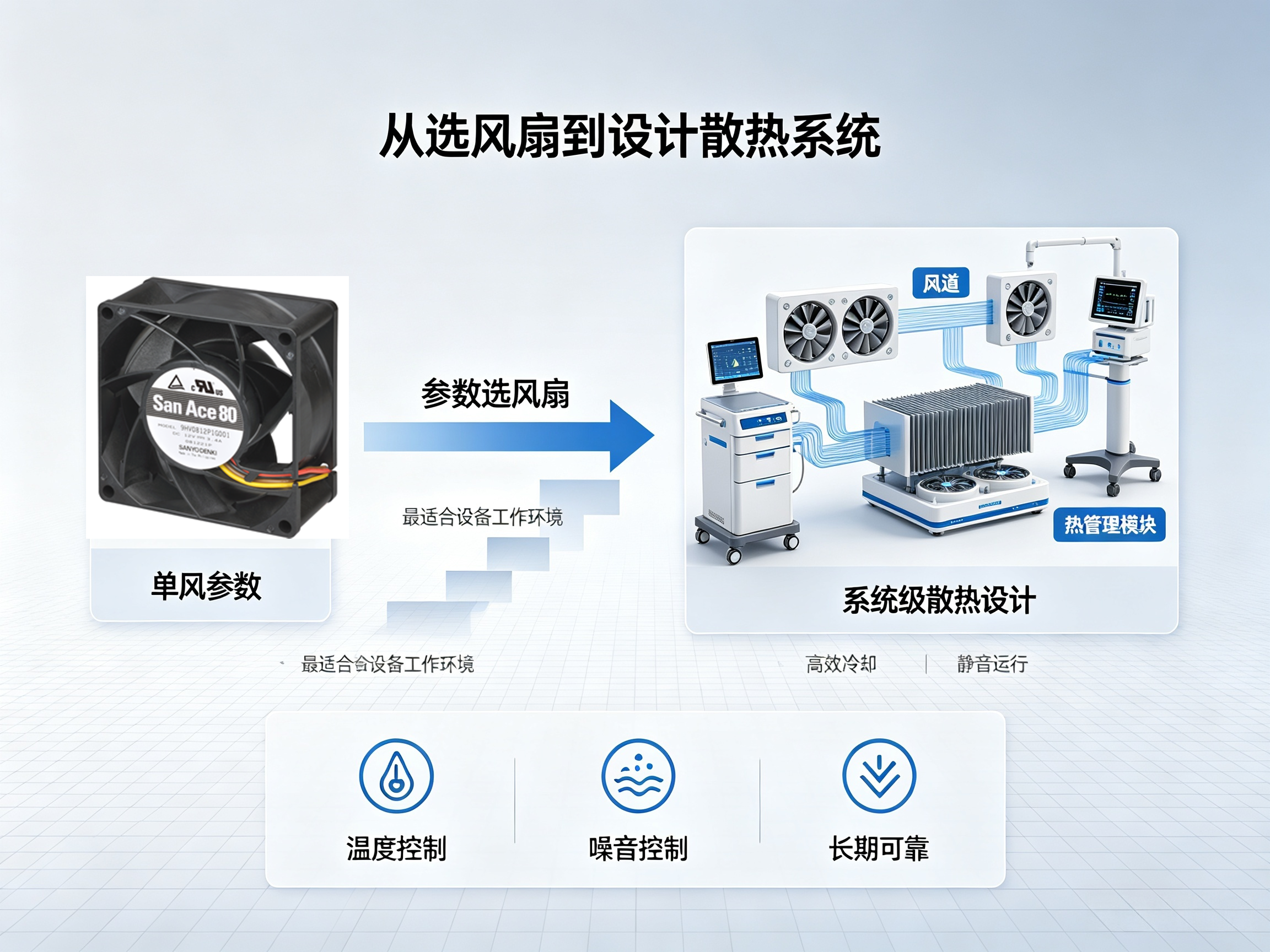
The development of medical equipment is shifting from simple functional competition toward overall user experience improvement.
Future cooling systems must address not only temperature control but also:
Through professional engineering analysis and optimized cooling solutions, SANYO DENKI San Ace cooling fans help medical equipment manufacturers achieve:
A balance between efficient cooling and quiet operation.
Making thermal management not just a hidden component function, but an important factor in improving the value of medical equipment.
台湾jamicon风扇、San Ace山洋散热风扇,AVC风扇,jentech风扇
Contact: Mr. Wang
Phone: 18038149909
Tel: 0755-23706799
Email: whd@jentech.cn
Add: No. 28, Tongyuwu Industrial Zone, Kuikeng Community, Guanlan Street, Longhua District, Shenzhen City. 6th floor, Building 1, Hualangjia Industrial Park
 Click to inquire