Welcome: SANYO DENKI San Ace cooling fan product chain in China region
Language:
 ∷
∷

∷
 ∷
∷

CT, MRI, DR, DSA, and other medical imaging systems rely on displays to present highly detailed diagnostic images. As display resolution, image quality, and processing capabilities continue to improve, the thermal management requirements inside the display are also becoming more demanding.
This raises an important question:
How can a high-resolution medical display effectively remove the heat generated during continuous operation?
Display drivers, power supplies, image-processing circuits, and other electronic components generate heat while operating. At the same time, medical displays typically need to operate reliably for extended periods, while their compact internal structures leave limited space for natural heat dissipation.
For this reason, thermal management is no longer simply a matter of lowering temperature. For high-resolution medical displays, it has become an important part of maintaining stable and reliable operation.
High resolution does not directly mean higher heat generation. However, high-resolution display systems are often accompanied by higher-performance display drivers, power electronics, and related processing components.
These components continuously generate heat during operation.
Meanwhile, medical displays need to balance image performance, enclosure dimensions, and internal component layout. There is limited space available for additional passive cooling structures.
As a result, thermal management is facing several simultaneous challenges:
| Development Trend | Impact on Thermal Management |
|---|---|
| Higher display resolution | Higher performance requirements for display and processing hardware |
| Improved display performance | Increased heat generation from continuously operating electronics |
| More compact equipment | Less internal space for natural airflow |
| Extended operating time | Cooling components must maintain stable performance over long periods |
| Medical application environments | Greater attention to noise, vibration, and reliability |
Under these conditions, natural convection alone may not always be sufficient.
When heat sources are concentrated and internal space is limited, a DC cooling fan can provide forced airflow to improve heat removal.
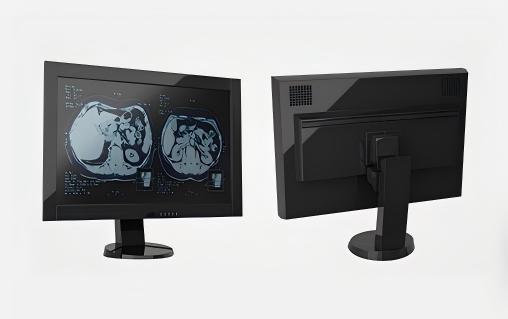
At first glance, the function of a cooling fan seems straightforward: move air through the equipment and remove heat.
In an actual medical display, however, the fan does not operate in an unrestricted environment.
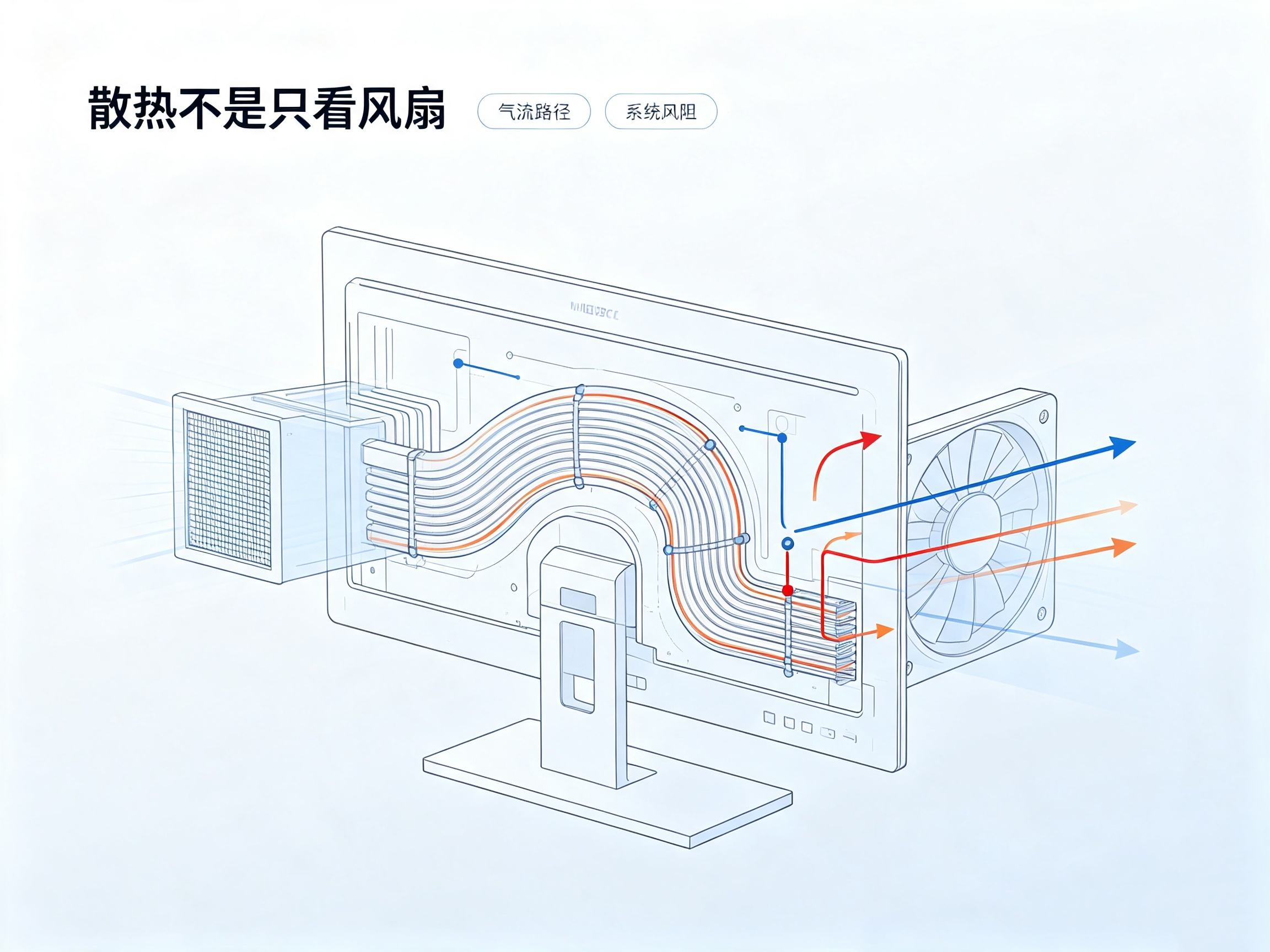
Air has to pass through the intake, filter structures, internal airflow paths, heat-generating components, and exhaust. Each part of the system can introduce airflow resistance.
Therefore, thermal management in a medical display needs to address several questions.
This is the fundamental requirement.
The cooling fan needs to establish sufficient airflow so that cooler air reaches major heat sources while warmer air surrounding electronic components is carried away.
This is one of the most commonly overlooked aspects of fan selection.
The maximum airflow listed in a fan specification is normally measured under defined test conditions. Once the fan is installed inside equipment, its actual operating point is affected by system resistance.
If the internal airflow path is narrow or a filter creates significant resistance, the actual airflow may be considerably different from the fan's free-air performance.
Therefore, airflow and static pressure need to be evaluated together with the actual airflow path of the equipment.
Medical environments are generally more sensitive to noise.
If a fan needs to operate continuously at high speed to achieve the required cooling performance, airflow noise may become noticeable.
For this reason, thermal design for medical displays needs to balance cooling performance with acoustic performance.
When selecting a cooling fan, it is tempting to assume that a higher airflow rating is always better.
For medical displays, however, the internal airflow path needs to be considered first.
If the airflow path is relatively open, airflow may be one of the most important parameters.
When air has to pass through filters, narrow passages, or complicated internal structures, static pressure capability becomes increasingly important.
A simple way to understand the difference is:
Airflow indicates how much air the fan can move, while static pressure indicates its ability to maintain airflow against system resistance.
Therefore, the fan and the thermal system should be evaluated together rather than separately.
| Thermal Design Factor | Key Consideration |
|---|---|
| Heat sources | Location and thermal load of major electronic components |
| Airflow | Amount of air delivered over a given period |
| Static pressure | Ability to overcome resistance in the airflow path |
| Airflow path | Intake, internal flow direction, and exhaust arrangement |
| Installation space | Fan frame size, thickness, and mounting requirements |
| Noise | Acoustic requirements in medical environments |
| Vibration | Effect of fan operation on the equipment structure |
| Service life | Reliability during extended operation |
| Control | Requirements for PWM speed control and speed monitoring |
This is why San Ace DC Cooling Fans need to be selected according to the actual thermal and mechanical conditions of the medical display.
Medical displays differ from many industrial devices because their operating environment can be relatively quiet.
A display may operate continuously in an environment where fan noise is more noticeable than it would be in a typical industrial application.
Therefore, cooling performance cannot be the only consideration.
A fan that provides sufficient airflow but produces excessive operating noise may not be the ideal solution for a medical display.
The San Ace product lineup includes Silent Fan models designed for applications where noise reduction is important. The appropriate fan can be selected according to the equipment's thermal load, airflow path, and acoustic requirements.
Vibration also deserves attention.
A cooling fan is a continuously rotating mechanical component. If its operating vibration is significant, vibration may be transmitted through the fan mounting structure and equipment enclosure.
For high-performance medical displays, the cooling system therefore needs to consider:
Cooling performance + noise + vibration
rather than airflow alone.

Medical displays are generally designed for extended operation.
The cooling fan is therefore not simply a component that operates for a short period after the equipment is powered on. It may continuously support heat removal throughout the operating cycle.
Under these conditions, fan reliability needs to be evaluated according to the actual operating environment.
Factors that can influence fan operating conditions include:
Ambient operating temperature
Fan operating speed
Internal airflow resistance
Dust and contaminants
Fan construction
Continuous operating time
For this reason, fan selection during the development of a high-resolution medical display should consider the expected operating conditions of the complete system rather than focusing only on initial airflow or purchase cost.
San Ace DC Cooling Fans are designed by considering factors including impeller shape, motor characteristics, operating airflow, and expected service life, helping balance performance and reliability for demanding applications.
The thermal load of a medical display does not necessarily remain constant throughout operation.
The workload of internal electronic components can change depending on display modes, processing tasks, and operating conditions.
If the fan always runs at maximum speed, it can provide substantial cooling capacity, but it may also generate unnecessary noise and consume additional power.
Where the equipment control system supports it, PWM can be used to control fan speed.
For example:
| Equipment Condition | Cooling Control Approach |
|---|---|
| Low thermal load | Reduce fan speed as appropriate |
| Normal operation | Maintain an appropriate fan speed |
| Increased thermal load | Increase fan speed |
| Temperature decreases | Reduce speed according to the control strategy |
The purpose is not simply to make the fan run more slowly.
Instead, PWM allows the cooling system to adjust its capacity according to the actual operating condition of the equipment.
For high-resolution medical displays, this can help achieve a better balance among thermal performance, noise, and power consumption.
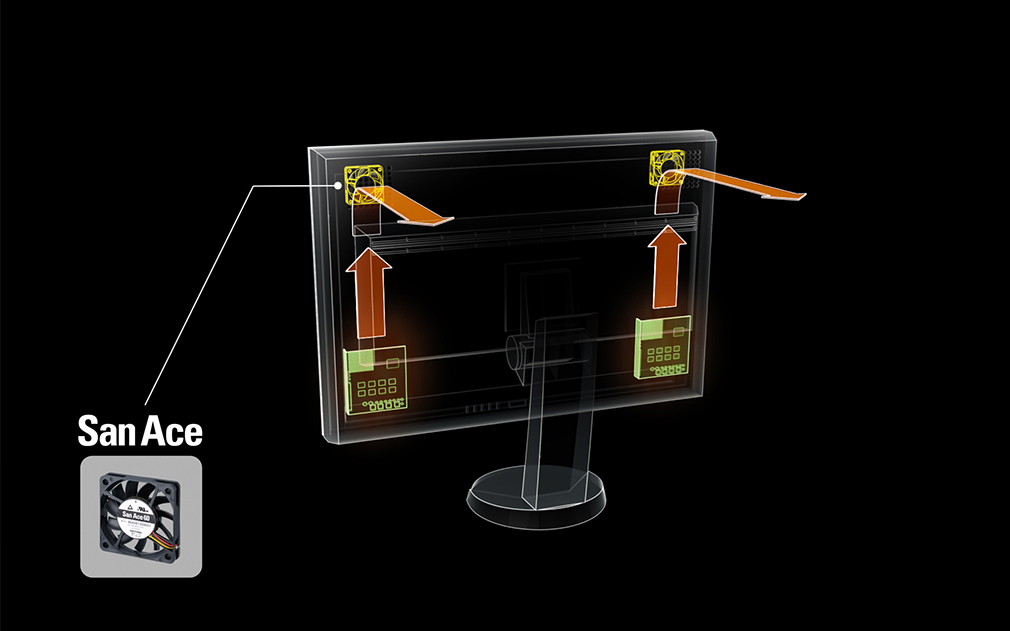
For medical equipment designed for extended operation, knowing whether the cooling fan is operating normally can be just as important as controlling its speed.
If a cooling fan develops an abnormal condition and the equipment cannot detect it, the internal temperature may gradually increase.
San Ace DC Cooling Fans can provide pulse sensor functions for detecting fan speed.
By monitoring the speed signal, the equipment control system can determine whether the fan is operating within the expected range.
Depending on the product and equipment requirements, additional fan monitoring functions such as locked-rotor detection and low-speed detection can also be considered.
This allows the cooling fan to become more than a simple heat-removal component. It can also contribute to the equipment's overall operating-status monitoring system.
High-resolution medical displays do not all have the same internal structure, thermal load, or airflow path.
Therefore, there is no single fan specification that is suitable for every display.
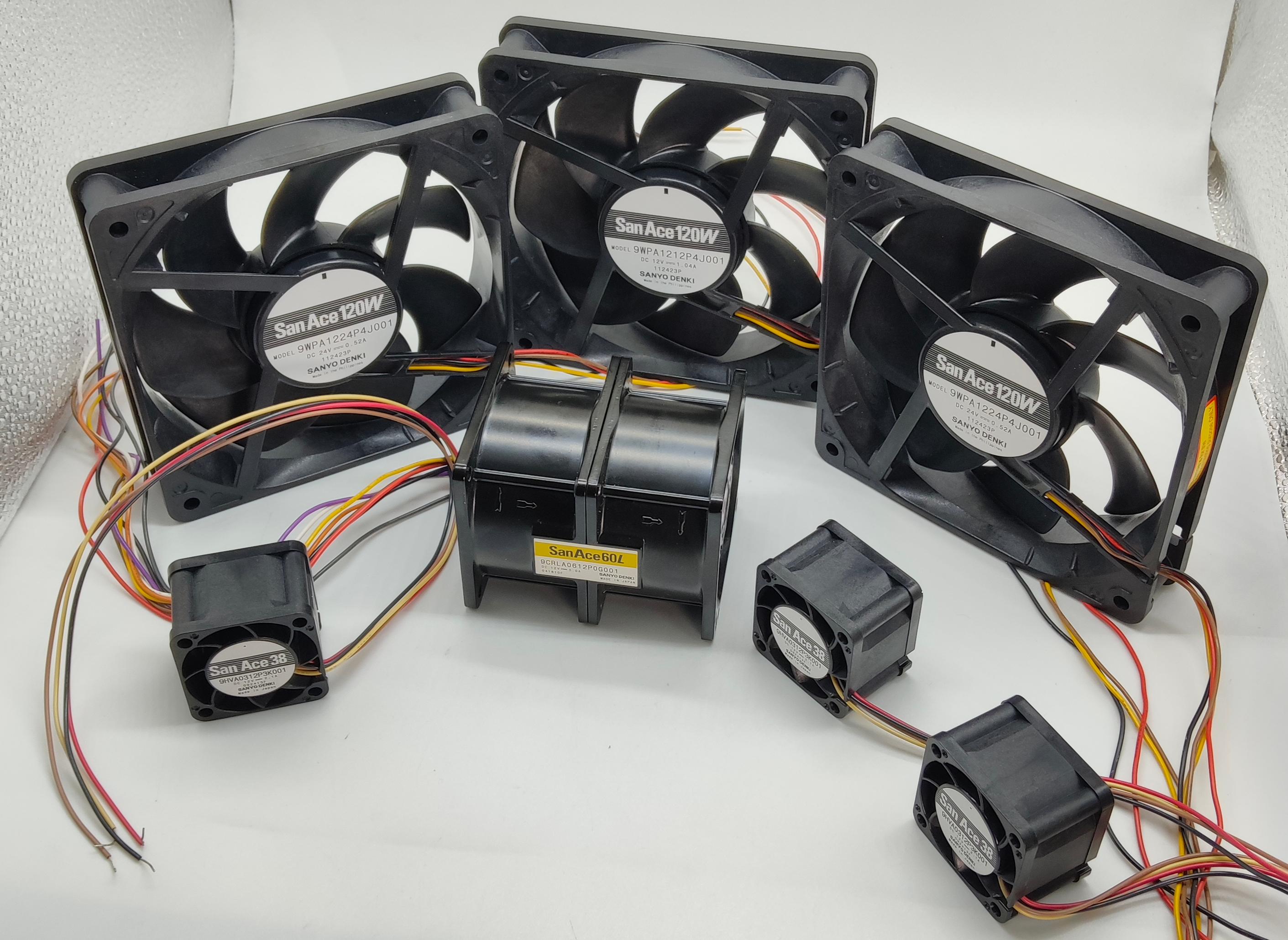
The San Ace DC Cooling Fan lineup includes various frame sizes and performance specifications, as well as different product series designed for specific application requirements.
| San Ace Product Type | Primary Application Consideration |
|---|---|
| DC Fan | General forced-air cooling |
| Low Power Consumption Fan | Equipment where power consumption is an important consideration |
| Silent Fan | Applications with demanding noise requirements |
| Long Life Fan | Equipment requiring extended operating life |
| Splash Proof Fan | Applications requiring splash protection |
| Oil Proof Fan | Specific environments where oil resistance is required |
| Counter Rotating Fan | Applications requiring higher airflow and static pressure |
| Blower | Specialized airflow paths and compact installation structures |
During the development of a medical display, the appropriate fan can therefore be selected according to thermal load, available space, airflow resistance, and acoustic requirements.
For a medical display, the fan is only one part of the thermal management system.
Effective thermal design should begin with the heat sources and proceed through the entire airflow system.
A practical design process can include the following steps:
1. Identify the heat sources
Determine the major heat-generating components, such as display drivers, power electronics, and other electronic modules.
↓
2. Analyze the airflow path
Determine where cooling air enters, how it moves through the equipment, and where heated air exits.
↓
3. Evaluate system resistance
Consider filters, airflow channels, heat sinks, and other structures that affect airflow resistance.
↓
4. Determine fan performance requirements
Evaluate the required airflow and static pressure according to the actual operating point.
↓
5. Control noise and vibration
Optimize fan operation while maintaining the required cooling performance.
↓
6. Consider long-term reliability
Select a suitable fan according to operating time and environmental conditions.
↓
7. Add control and monitoring functions
Consider PWM speed control, speed sensing, and other functions according to the requirements of the equipment control system.
This system-level approach is more appropriate for high-resolution medical displays than simply selecting a fan with the highest airflow rating.
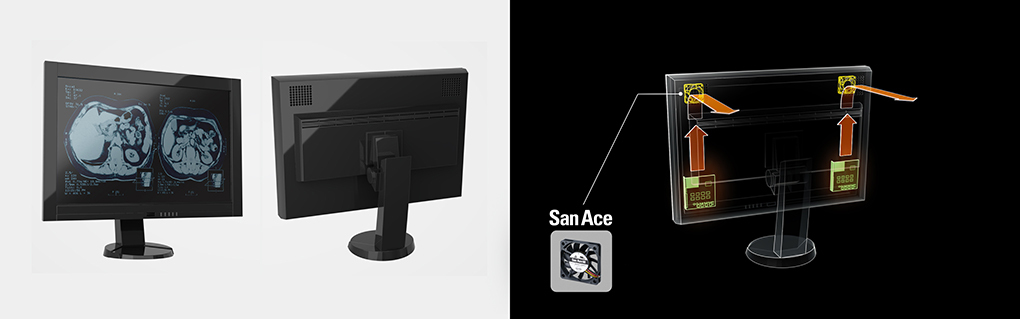
Medical imaging displays are continuing to move toward higher resolution and higher performance.
As displays process and present increasingly detailed medical images, the internal electronic components must continue to operate reliably within increasingly compact equipment structures.
This makes thermal management an increasingly important part of display design.
For high-resolution medical displays, an effective cooling solution is not simply a matter of adding a fan. Instead, the heat sources, airflow path, fan performance, and control system need to work together.
San Ace DC Cooling Fans provide a range of sizes and performance specifications, allowing designers to consider airflow, static pressure, noise, vibration, service life, and control functions according to specific equipment requirements.
The ultimate objective is clear:
To remove the heat generated by a high-resolution display system effectively within limited internal space, while maintaining the low noise, low vibration, and long-term reliability expected of medical equipment.
As medical display technology continues to advance toward higher resolution, thermal management will become an increasingly important part of overall equipment design.
For medical display developers, incorporating thermal management into the design process at an early stage can help achieve a better balance among display performance, mechanical structure, acoustic performance, and long-term reliability.
jamicon cooling fan,AVC cooling fan,jentech cooling fan,AVC fan
Contact: Mr. Wang
Phone: 18148574796
Tel: 0755-23706799
Email: wmc@jentech.cn
Add: No. 28, Tongyuwu Industrial Zone, Kuikeng Community, Guanlan Street, Longhua District, Shenzhen City. 6th floor, Building 1, Hualangjia Industrial Park
 Click to inquire