Welcome: SANYO DENKI San Ace cooling fan product chain in China region
Language:
 ∷
∷

∷
 ∷
∷

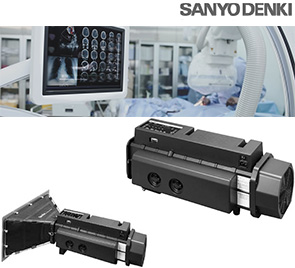
With the continuous advancement of medical technology, medical imaging equipment has become an essential tool for early disease detection, accurate diagnosis, and treatment support.
In recent years, medical equipment manufacturers have focused not only on improving:
but also on enhancing the overall user experience for patients.
Especially for medical imaging equipment used near patients, operating noise has become an important factor affecting comfort and confidence during examinations.
Therefore, when developing a new model of medical imaging equipment, N Company identified:
as one of the key product differentiation goals.
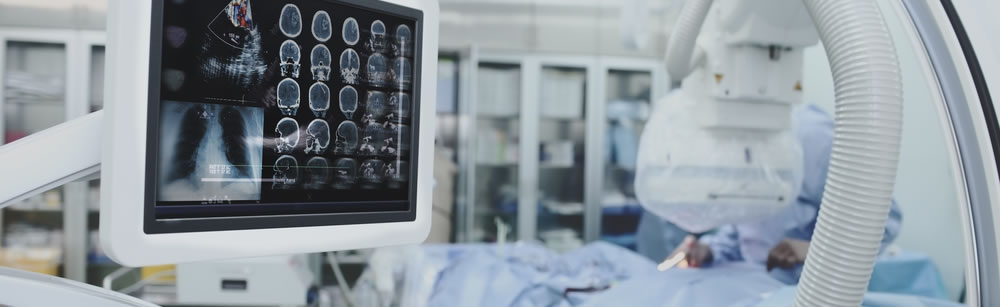
To reduce equipment noise, N Company first focused on improving the cooling fan.
The engineering team selected several cooling fans based on catalog specifications, including:
However, during actual equipment testing, they encountered an unexpected challenge.
Although some fans achieved:
after installation, they also caused:
On the other hand, fans with stronger cooling capability:
but:
N Company discovered that:
Simply selecting a low-noise fan does not guarantee optimal performance in the actual equipment.
Cooling fan catalogs generally provide specifications such as:
However, these values are measured under standardized test conditions.
Once a fan is installed inside actual equipment, its performance can be affected by:
As a result, the same fan may perform differently depending on the equipment design.
Therefore, N Company faced a critical question:
How can engineers quickly identify a cooling fan that achieves both low noise and sufficient cooling performance during the development stage?
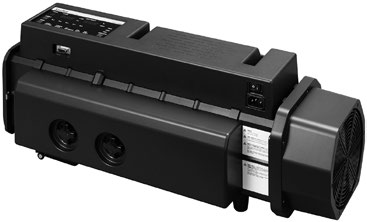
To address this challenge, SANYO DENKI engineers did not simply recommend a fan model.
Instead, they first analyzed the actual airflow environment inside the equipment.
Using:
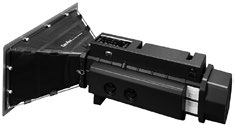
SANYO DENKI engineers measured the airflow characteristics of N Company's prototype medical imaging equipment.
Through the measurement process, they obtained:
System impedance represents:
The resistance to airflow inside the equipment.
For example, system impedance increases when:
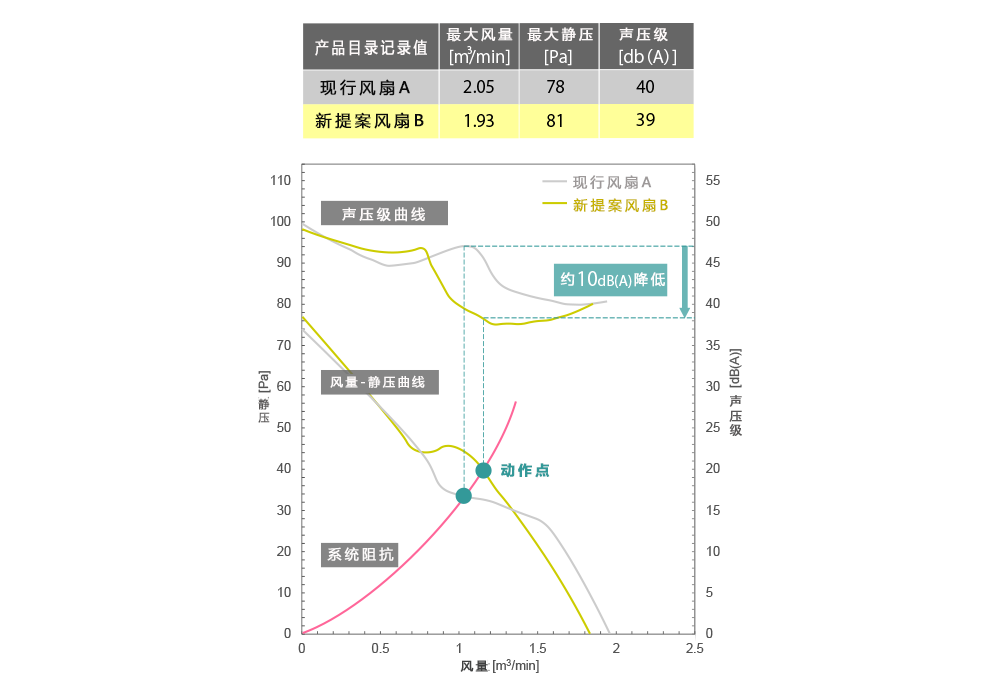
A cooling fan does not operate according to its maximum airflow or maximum static pressure values shown in the catalog.
The actual operating condition is determined by the intersection between:
and
This intersection is called:
By identifying the operating point, SANYO DENKI engineers could accurately evaluate:
This approach helps avoid a common issue:
Selecting a fan based only on catalog specifications, but finding that the actual performance is insufficient after installation.
Based on the measurement results, SANYO DENKI analyzed multiple fan solutions.
The final recommendation was:
Although Fan B did not appear significantly superior to the existing Fan A when comparing only catalog specifications, the operating point analysis revealed important differences.
Under actual equipment conditions, Fan B provided:
N Company then conducted an actual equipment evaluation.
The test results showed:
At the same time:
As a result, N Company decided to adopt the recommended fan solution.
Through this project, N Company not only solved the cooling fan selection challenge but also gained a more efficient approach to thermal design.
Project achievements:
| Item | Improvement |
|---|---|
| Fan selection method | Changed from repeated prototype testing to data-based analysis |
| Noise performance | Reduced by approximately 10 dB |
| Cooling performance | Met equipment cooling requirements |
| Development efficiency | Shortened fan evaluation time |
| Future application | Applicable to enclosure and airflow design optimization |
For medical equipment, inspection devices, and precision instruments:
A cooling fan is not simply a replaceable component.
An effective thermal design requires comprehensive consideration of:
By measuring airflow and pressure characteristics, engineers can understand the actual cooling conditions at an early development stage.
This allows fan selection to evolve from:
“Testing until the right fan is found”
to:
“Measuring, analyzing, and verifying the optimal solution.”
For medical equipment applications where low noise and high reliability are essential, the best cooling solution is not simply choosing the most powerful fan.
The key is finding:
The cooling fan that best matches the actual operating conditions of the equipment.
Through professional measurement technology and engineering support, SANYO DENKI San Ace helps customers achieve:
Low-noise, highly reliable, and efficient thermal designs.
Contact: Mr. Wang
Phone: 18038149909
Tel: 0755-23706799
Email: whd@jentech.cn
Add: No. 28, Tongyuwu Industrial Zone, Kuikeng Community, Guanlan Street, Longhua District, Shenzhen City. 6th floor, Building 1, Hualangjia Industrial Park


 Click to inquire