SANYO DENKI San Ace 109BM12MC2-1: A Low-Power 12V DC Blower for Compact Equipment Cooling
In compact electronic equipment, thermal management is not always about achieving the highest possible airflow. Many systems operate with relatively moderate heat loads but have strict limitations on power consumption, acoustic performance and installation space.
For these applications, selecting an oversized cooling fan can introduce unnecessary power consumption and noise.
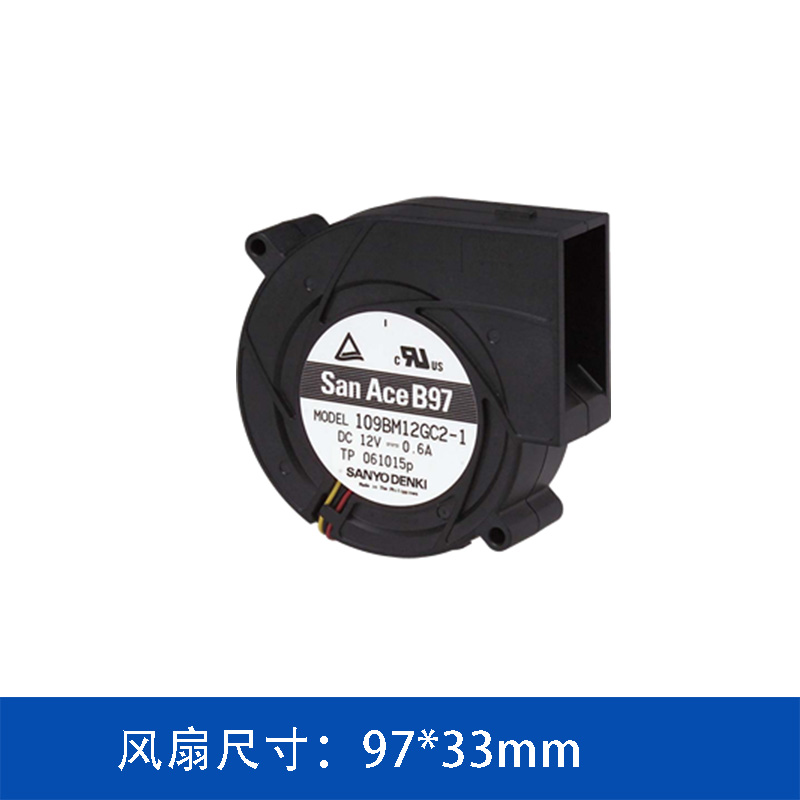
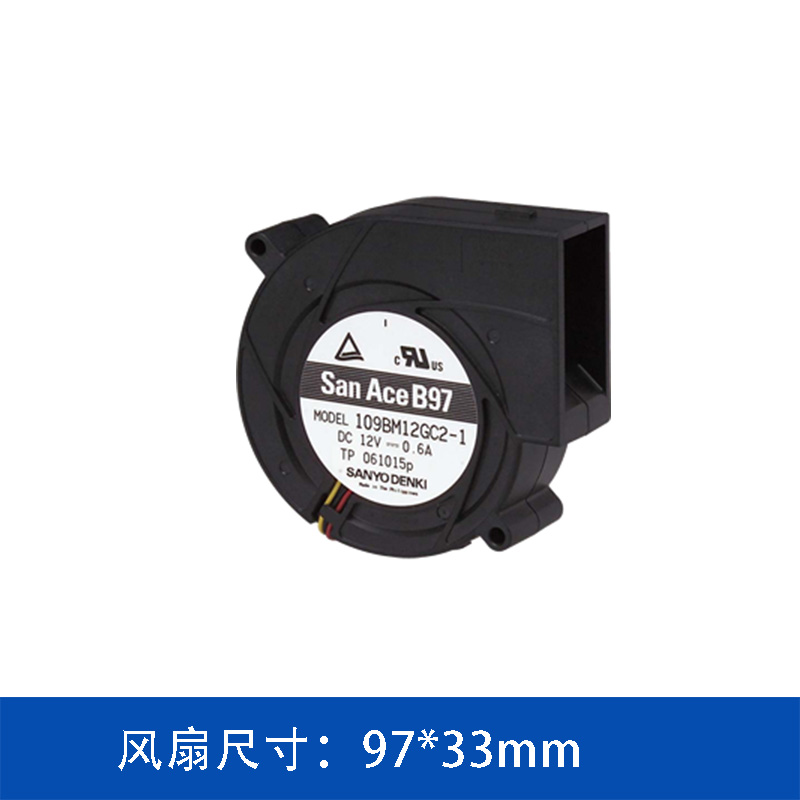
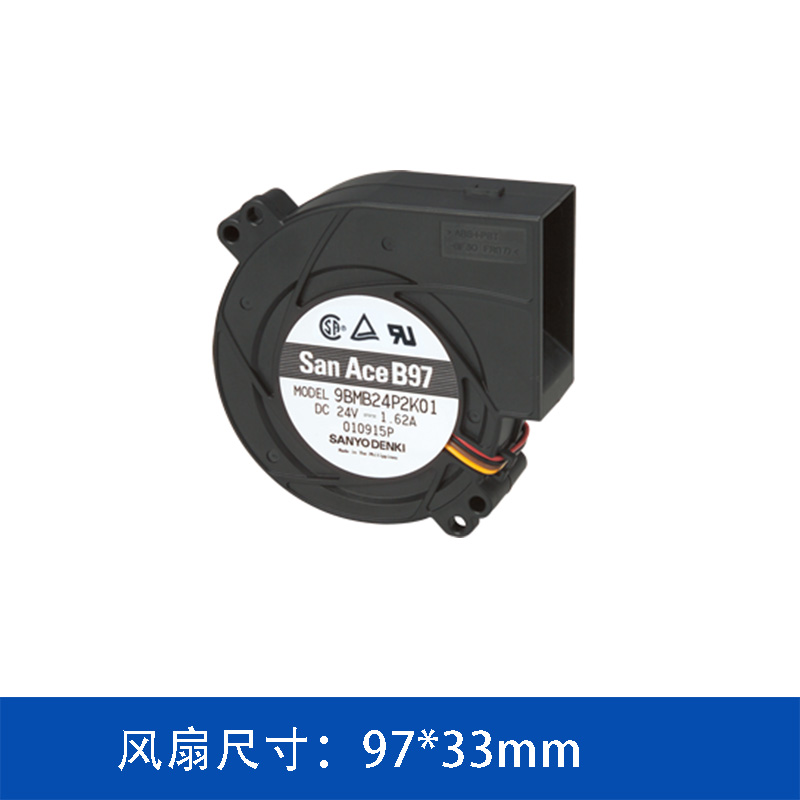
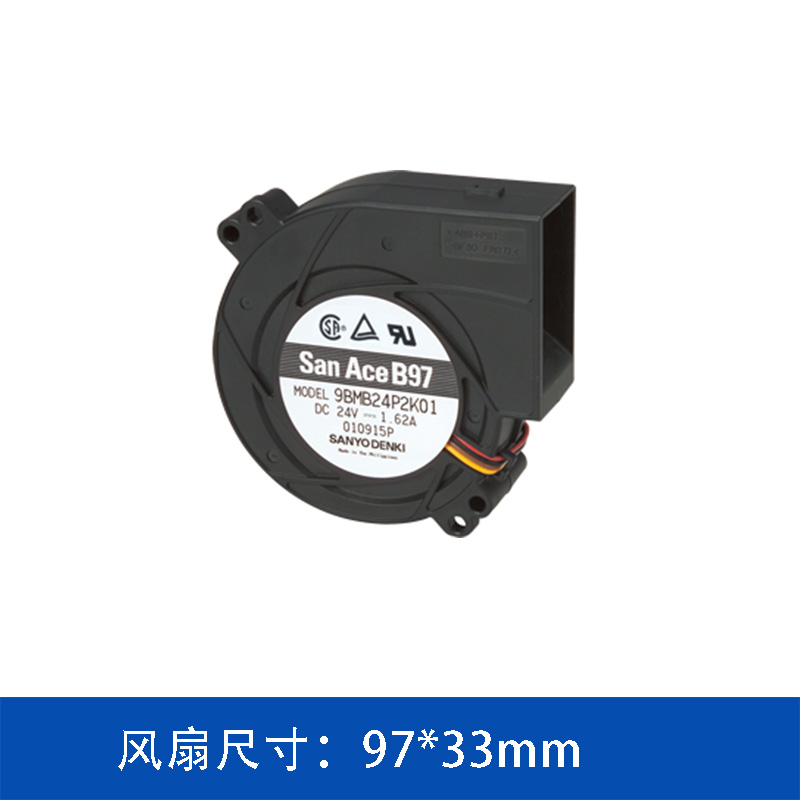
The SANYO DENKI San Ace 109BM12MC2-1 provides a different approach. This 97×97×33mm DC blower operates from a 12V power supply and is designed around relatively low rotational speed, low power consumption and controlled airflow.
The model has a rated power consumption of only 3.12 W, a rated speed of 2700 min-1, maximum airflow of 20.5 CFM, maximum static pressure of 119 Pa, and a noise level of 43.5 dBA.
1. 97×97×33mm Blower for Space-Constrained Systems
The 109BM12MC2-1 belongs to the 97×97×33mm blower size class, commonly referred to as a 9733 blower.
Its compact form factor allows it to be integrated into equipment where available installation space is limited.
Unlike a conventional axial fan, a blower uses an impeller and housing structure to redirect the airflow. This can make the blower particularly useful when the equipment requires airflow to follow a defined internal route.
For example:
Air inlet → blower → internal airflow channel → heat sink → air outlet
This arrangement can be useful in compact enclosures where simply placing an axial fan over the heat source is not practical.
2. Low 3.12 W Power Consumption
One of the key characteristics of the 109BM12MC2-1 is its relatively low electrical power consumption.
The rated electrical specifications are:
|
Parameter
|
Specification
|
|
Model
|
109BM12MC2-1
|
|
Product type
|
DC Blower
|
|
Dimensions
|
97 × 97 × 33 mm
|
|
Rated voltage
|
12 V DC
|
|
Rated current
|
0.26 A
|
|
Rated power
|
3.12 W
|
|
Rated speed
|
2700 min-1
|
|
Maximum airflow
|
0.58 m³/min
|
|
Maximum airflow
|
20.5 CFM
|
|
Maximum static pressure
|
119 Pa
|
|
Maximum static pressure
|
0.478 inchH₂O
|
|
Noise
|
43.5 dBA
|
|
Sensor
|
Pulse sensor
|
At 3.12 W, the model is positioned toward applications where the cooling requirement does not justify the electrical consumption of a higher-speed blower.
This can be relevant for equipment that operates continuously, particularly when the cooling system itself contributes to the total energy consumption of the product.
3. 2700 min-1 Rated Speed for Moderate Cooling Requirements
The rated speed of the 109BM12MC2-1 is 2700 min-1.
Within the same 97×97×33mm blower family, different models are available with different rotational speeds and performance levels.
A lower-speed model can be advantageous when the equipment has a moderate thermal load and does not require extremely high airflow.
Instead of selecting the most powerful blower available, engineers can consider a more closely matched model based on:
-
Heat generation
-
Required airflow
-
System impedance
-
Operating temperature
-
Acoustic requirements
-
Available power budget
This approach can help avoid unnecessary overspecification.
4. 20.5 CFM Airflow for Compact Electronic Cooling
The 109BM12MC2-1 has a maximum airflow of 0.58 m³/min, equivalent to 20.5 CFM.
Maximum airflow represents the fan's airflow capability under a low-resistance condition. In a real piece of equipment, the actual operating airflow will generally be lower because components such as heat sinks, filters, ducts, grilles and internal passages introduce resistance.
Therefore, the 20.5 CFM value should be considered together with the model's 119 Pa maximum static pressure.
For engineering selection, the actual operating point is determined by the intersection between the blower performance curve and the equipment system resistance curve.
5. 119 Pa Static Pressure for Controlled Airflow Paths
Although the 109BM12MC2-1 is a low-power model, it is still a blower rather than a simple free-air circulation fan.
Its maximum static pressure is 119 Pa, or approximately 0.478 inchH₂O.
This makes the model suitable for applications where the airflow encounters some resistance but where extremely high pressure performance is not required.
Possible sources of resistance include:
-
Narrow ventilation passages
-
Heat sinks
-
Protective grilles
-
Filters
-
Internal partitions
-
Short ducts
-
Compact electronic assemblies
When designing the cooling path, engineers should therefore consider the total resistance rather than looking only at the fan's free-air airflow specification.
6. 43.5 dBA Noise Level
The rated noise level of the 109BM12MC2-1 is 43.5 dBA.
This is one of the characteristics that distinguishes the model from higher-speed alternatives within the same size family.
In applications where the cooling load is moderate, using a lower-speed blower can help avoid excessive airflow and acoustic output.
Potential applications include equipment installed in:
-
Office environments
-
Laboratories
-
Control rooms
-
Communication rooms
-
Indoor electronic equipment
-
Instrumentation systems
However, the final acoustic performance depends on the complete equipment structure. Fan noise can be affected by air turbulence, outlet geometry, enclosure resonance, mounting structure and system resistance.
7. Pulse Sensor for Cooling System Monitoring
The 109BM12MC2-1 incorporates a pulse sensor.
For equipment operating continuously or unattended, monitoring fan rotation can be an important part of the overall thermal protection strategy.
The host controller can use the pulse signal to monitor whether the blower is operating normally.
Depending on the equipment control strategy, fan monitoring can help identify conditions such as:
-
Fan stoppage
-
Abnormal rotation
-
Fan disconnection
-
Cooling system malfunction
This provides equipment designers with an additional method of monitoring the cooling subsystem.
8. 40,000-Hour Expected Life at 60°C
The specified expected life of the 109BM12MC2-1 is:
40,000 hours at 60°C
and
70,000 hours at 40°C.
The relationship between temperature and fan life is important when designing equipment for continuous operation.
The actual service life can also be influenced by environmental and operating conditions, including:
-
Ambient temperature
-
Internal equipment temperature
-
Dust
-
Operating conditions
-
Installation configuration
-
Fan operating point
-
Operating voltage
Therefore, the expected life specification should be evaluated together with the actual thermal environment of the application.
9. Applications for the 109BM12MC2-1
The combination of 3.12 W power consumption, 20.5 CFM airflow and 43.5 dBA noise makes the 109BM12MC2-1 particularly interesting for compact systems with moderate thermal requirements.
Industrial Electronics
Compact controllers and electronic modules may generate localized heat while having limited available power for cooling. A low-power blower can provide forced airflow without adding a large electrical load.
Communication Equipment
Communication and networking equipment may operate continuously, making cooling energy consumption an important consideration. The 109BM12MC2-1 can be evaluated where moderate airflow is sufficient.
Instrumentation
Measurement and control instruments often combine compact internal layouts with acoustic considerations. The blower's small footprint and moderate noise level can be useful in these applications.
Embedded Equipment
Enclosed electronic systems can benefit from a controlled airflow path rather than unrestricted air circulation. The blower format provides flexibility for routing air through the enclosure.
Compact Power Electronics
For relatively low-to-moderate heat loads, a 3.12 W blower can provide an alternative to higher-power cooling solutions.
10. How to Evaluate the 109BM12MC2-1 in a Real Application
Choosing a cooling fan should start with the thermal requirements of the equipment rather than the fan model itself.
A practical evaluation can follow these steps.
Step 1: Determine the Heat Load
Calculate the amount of heat generated by the major components.
Step 2: Establish the Required Airflow
Estimate the airflow required to maintain the target component temperature.
Step 3: Identify System Resistance
Include:
-
Heat sinks
-
Filters
-
Ducts
-
Grilles
-
Vent openings
-
Internal channels
Step 4: Determine the Fan Operating Point
Compare the system resistance curve with the blower's P-Q performance curve.
Step 5: Check Electrical Compatibility
The 109BM12MC2-1 requires a 12V DC supply and has a rated current of 0.26 A.
Step 6: Evaluate Noise
Check the complete equipment's acoustic requirements rather than considering the fan specification alone.
Step 7: Verify Operating Temperature
Confirm that the fan's operating environment is compatible with the expected equipment lifetime.
11. 109BM12MC2-1 Key Specifications
The main specifications of the SANYO DENKI San Ace 109BM12MC2-1 are summarized below:
-
Model: 109BM12MC2-1
-
Brand: SANYO DENKI / San Ace
-
Product: DC Blower
-
Dimensions: 97 × 97 × 33 mm
-
Rated voltage: 12 V DC
-
Rated current: 0.26 A
-
Rated power: 3.12 W
-
Rated speed: 2700 min-1
-
Maximum airflow: 0.58 m³/min / 20.5 CFM
-
Maximum static pressure: 119 Pa / 0.478 inchH₂O
-
Noise: 43.5 dBA
-
Sensor: Pulse sensor
-
Expected life: 40,000 h at 60°C / 70,000 h at 40°C
Conclusion
The SANYO DENKI San Ace 109BM12MC2-1 is a compact 97×97×33mm 12V DC blower designed for applications where cooling performance needs to be balanced with electrical consumption and acoustic requirements.
With only 3.12 W rated power, a 2700 min-1 rated speed, 20.5 CFM maximum airflow, 119 Pa maximum static pressure and 43.5 dBA noise, it provides a lower-power option within the 9733 blower family.
For compact electronic equipment, the most appropriate blower is not necessarily the model with the highest airflow or highest static pressure. Matching the blower to the actual thermal load and system resistance can provide a more efficient cooling design.
The 109BM12MC2-1 is therefore worth considering when a compact 12V blower is required and the application places particular emphasis on low power consumption, moderate airflow and controlled acoustic performance.
 ∷
∷




 Click to inquire